
The Cost of Trying Has Changed
I asked ChatGPT to turn on my television. It didn't work. Then I wrote four essays about why that failed request had left me marveling at what I could build.
The television is attached to a Raspberry Pi 500 I've been turning into RetroMachine, a homebrew system for games and media. I can browse from my phone, change an interface I can't see, and build features without persuading a company that enough other customers want them. The assistant's TV connection still needed work. I expected to fix it. That expectation was the interesting part.
I've accumulated ideas for years that I knew how to build and never attempted. Knowing how didn't make them worth several evenings of development, debugging, and maintenance. I could buy something close and tolerate its decisions. Eventually, making do became the way things worked.
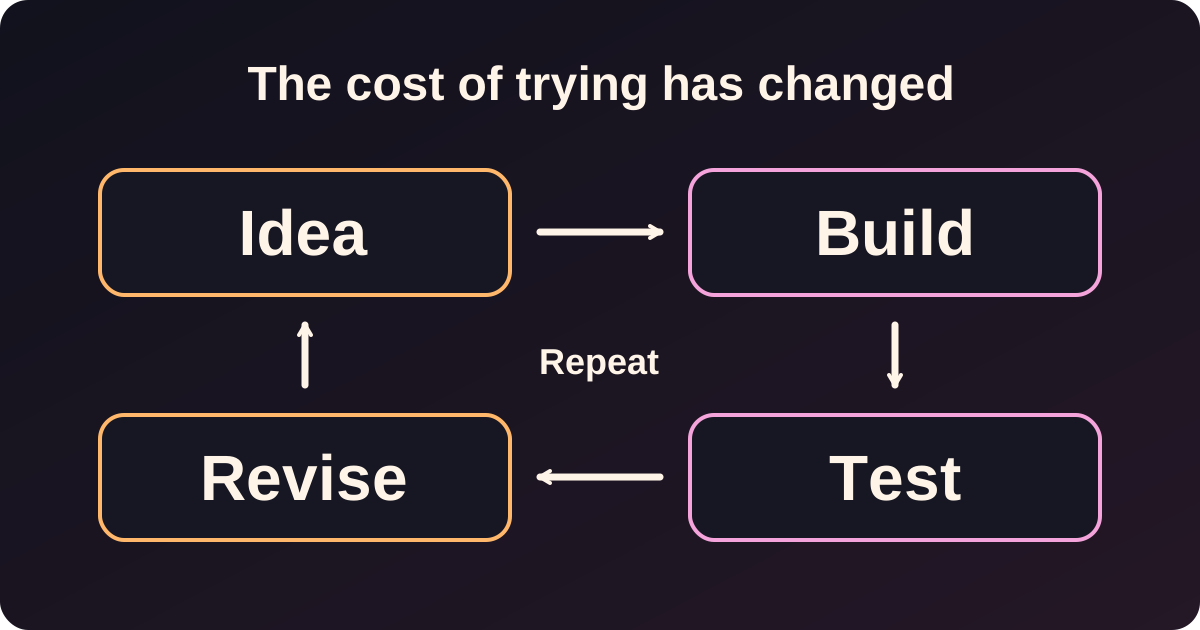
AI has changed that calculation. I can begin with an intention, inspect the implementation, and revise against something real. I still need to understand the system and catch the failures. But more ideas now fit inside the time I'm willing to spend discovering whether they're useful.
That matters professionally. A cheaper experiment lets us revisit an idea we dismissed when the first attempt would have consumed weeks. We can discover which assumptions were wrong and decide what deserves the work of becoming dependable. The cost of trying has changed before the obligation to deliver has gone anywhere.
It also changes who decides what is worth building. Accessibility is personal for me. If I can't read a control in software I own, I can change it. A household tool or a game for friends can succeed by serving those people. Treating commercial viability as the measure of usefulness has hidden a lot of work worth doing.
The newsletter
Get the build notes.
I write about building AI systems in public—what worked, what broke, and what I’d do differently.
I published The Old Limitations No Longer Apply on The Arcades' Lab today. Four parts follow that argument from my living room to software economics and the things we can finally afford to attempt:
- The Price of Admission — how the idea can come before the technical apprenticeship, and why experienced programmers still left ideas unbuilt.
- The Rentier's Last Stand — what happens to software moats when alternatives become affordable and their builders don't need a business.
- What Happens When We Can Make Our Own? — accessibility, personal tools, furry sports games, and the useful work a market couldn't justify funding.
- What's Left to Build? — cheaper failure, uneven abundance, and the imagination we rationed because acting on it cost too much.
The series begins with unfinished software because that's where building happens. Taste, judgment, testing, and persistence still matter. They help turn an affordable attempt into something another person can depend on.
The next useful question is which ideas we're still ruling out with a cost estimate that no longer applies.