
Engineering with love
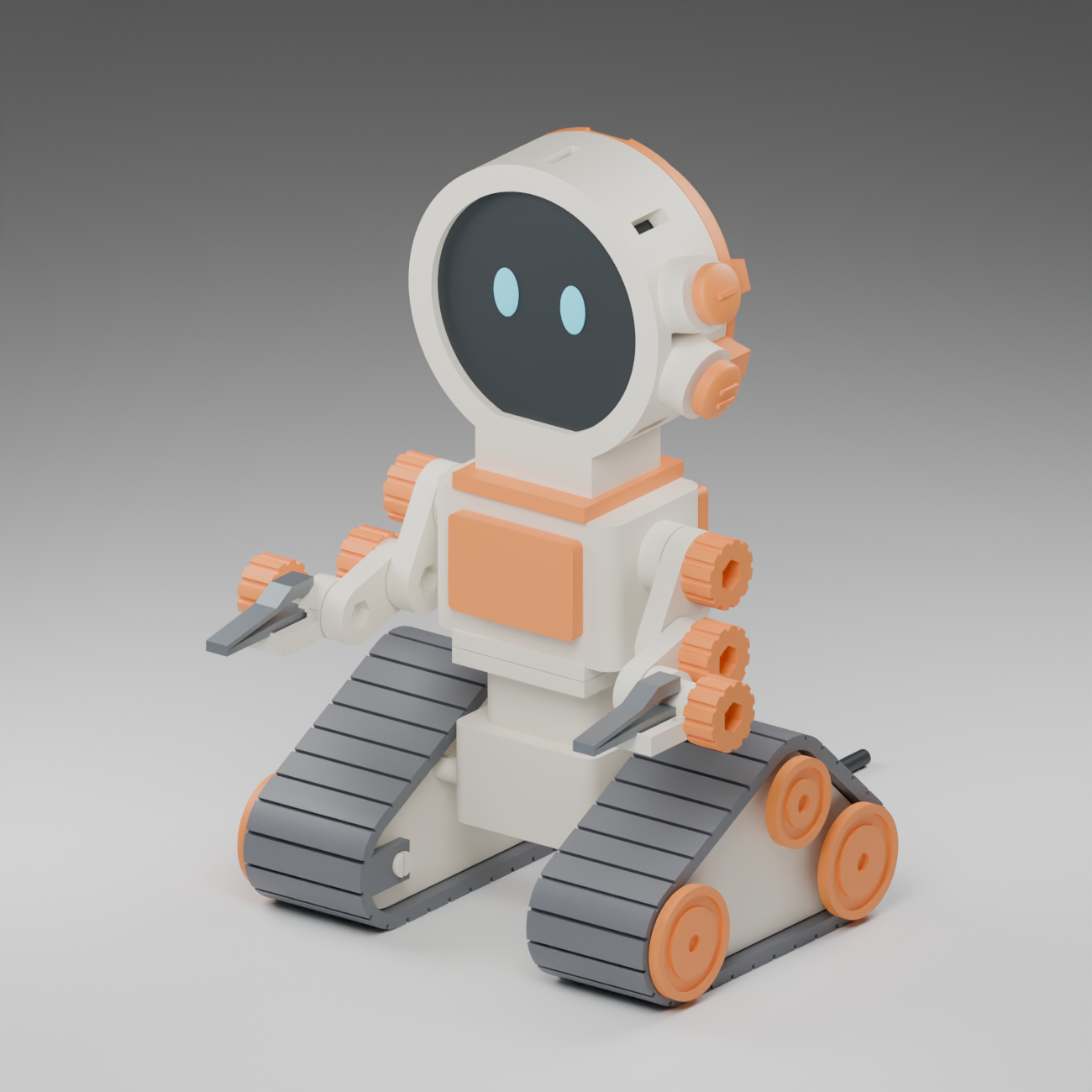
The first thing I want the kids to do with these robots is take the head off.
I haven't given them the robots yet. This is the scene I keep imagining: here's this little thing I made for you, and before you get too precious about it, let's open it up. See how the body comes apart. See what's inside. Put it back together. I don't want taking something apart to feel like crossing a line you're not supposed to cross. I want it to be one of the ways you get to know the thing.
I have three nieces and nephews who are absolute creative monsters. One is into robotics and loves LEGO. One is an artist. One is a gamer who's learning to code. They're different people, and I don't want to give them three copies of my idea of what a creative kid ought to enjoy. I want to give them something with a way in for each of them.
I've been the cool aunt with the Smashbox subscriptions and the interesting things to try. Middle school is when kids work out what they like and what they can do. I want to stay connected to that process. Not manage it. Be available for it.
I want to give them two gifts: an engineering mindset, and my love.
Turns out, those are hard invariants to work with.
I was laid off in September, which explains the timing. I've kept busy, but I've been thinking about what I want to spend my time making, and who I want to make it for. Then I saw a video of a little robot, and I started wondering what a toy like that could be for these kids.
The hardware is small: an ESP32-based device, a battery, a microphone, a speaker. It can lean on a computer outside the body. That opens a lot of possibilities while staying small enough for a middle schooler to understand.
AI is not the goal. I am building a toy. If an AI capability helps the toy respond to something the artist wants to show it, that's interesting. If it helps the coder get from an idea to an experiment, that's interesting too. But I don't want the kids to admire the technology. I want them to find something they want to do with it.
Each kid gets a way in.
For the robotics kid, I specced the body to LEGO sizing, so she can replace and rebuild, iterate and learn. I hope that leads into Technic and whatever mechanisms she gets curious about. I don't know what she'll build. Leaving that open is part of the specification.
For the artist, I want the toy to look at a photograph or a drawing and respond. That's the intended interaction, not something the kids have tried yet. I want their art to have a place in this thing, not a spot as decoration around the engineering.
For the gamer, PocketLab is a browser-based coding environment I'm building around the project. I want it approachable enough to start playing with, vibe coding included, with code you can open and explore.
For the parents, I’m designing a layer of support that uses AI to review the underlying activity records and flag things that might need an adult’s attention. My intention is that those records otherwise stay in the background, leaving the kids room to explore without turning every experiment into a report. That takes care too: deciding what gets saved, being clear with the kids about how it works, and remembering that an AI flag is a reason to look closer, not a verdict.
I count that as a first-party feature for kids who grow up fast.
How do you teach kids an engineering mindset? You scaffold. Then, as they gain mastery, you remove the supports.
The alternative to a sealed product isn't a pile of inaccessible parts and a pat on my own back for all that freedom. There has to be a way to begin. There has to be a next step they can take without already knowing everything.
The newsletter
Get the build notes.
I write about building AI systems in public—what worked, what broke, and what I’d do differently.
My job isn't to keep the supports in place forever. It's also not to disappear the moment the gift changes hands. I can help them find the next step without deciding where the project ends. I can help fix the thing without taking it back and turning it into my project again.
The body makes that invitation visible. A body made to be changed says something different from a body you're afraid to scratch. Taking the head off should be ordinary. Putting it back should be ordinary too.
That doesn't make it indestructible. Batteries need proper handling, and electronics can break. But my rough figure for the electronics is about $32. Replacing a part is a different prospect from ruining an expensive, mysterious object. Breakage doesn't have to end the project, and they don't have to face it alone. Frustration and iteration can be fun in the long run.
Delight doesn't excuse sloppy work. Passing software tests doesn't certify the stability of the product, so I run lots of iterations myself. I test the less photogenic parts too, like connections that fail and inputs that arrive in the wrong order, so I can repair the toy when somebody else is holding it.
With AI, big ambitious projects can aim at vanishingly small audiences. This one aims at three children I love. I have no plan to sell it. Its success can be specific to them.
That freedom runs straight into a problem of mine. My ambitions are large. I have plenty of projects that began huge and never held my attention long enough to become what I imagined. A beautiful idea for the future of a thing is not the same as showing up to do the work that gives it a future.
Promising the kids is also my way of promising myself that I'll get focused. I'm collaborating with these children now, and I have to show up. That's a commitment I'm making, not a responsibility I'm handing to them.
I don't want to solve my ambition problem by making their possibilities small. I want to make my next piece of work small enough to finish, give them something real to start with, and keep showing up for what happens next. The finished first version and the open-ended future are not enemies. One is how we get to the other.
This is the promise I want to make:
This robot is my opening bid. What it becomes is for you to decide, and I'll help you figure out how to make it real. You will break this thing and we will fix it together. You will make cool things and I will celebrate the things that you make. You will have ideas and no clue where to take them, and I will help you find the next step you can take.
I will be there too, making things and showing my mistakes when I make them. I hope for the same from you.
That's a lot for a little robot to hold. I just hope the little buddy is up to the task.
I'll be sure to let you all know how it goes after Christmas.